24-Form Tai Chi
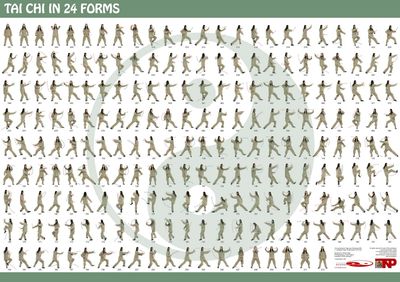
24-Form Tai Chi (Simplified Yang Style)
Professor Li Shixin (李士信) of Peking University personally trained and certified our lead instructors, Ivy Yew Suet Mee and David Lyle Schneider, in this elegant, health-oriented form. As one of China’s foremost Wushu and Qigong authorities — Vice President of the Beijing Wushu Research Society and Director of the Beijing Advanced Level Chinese Wushu Qigong Institute — Professor Li championed the 24-Form as the perfect entry point for students of all ages and abilities. It distills the essence of traditional Yang-style Tai Chi into a concise, flowing sequence that builds strength, balance, focus, and inner calm in just 6–8 minutes.
History & Significance
In 1956, the Chinese National Sports Commission created the Simplified 24-Form Tai Chi (also called Beijing 24 or Yang 24) to make Tai Chi accessible for mass health promotion, schools, and workplaces. Drawing from the longer traditional Yang-style forms, it retains the core principles of yielding, circular movement, weight shifting, and coordinated breathing while removing repetitions and complexity.
This form became the national standard taught across Chinese universities — including Peking University, where Professor Li and his colleagues have preserved and transmitted its authentic flavor for generations. It is now the most widely practiced Tai Chi routine in the world and the foundation of many beginner and intermediate classes for Tai Chi programs.
Benefits of Regular Practice
Regular practice delivers measurable physical and mental gains:
- Improves balance, posture, coordination, and joint mobility
- Strengthens legs, core, and upper body while remaining low-impact
- Enhances cardiovascular health and respiratory function
- Reduces stress, anxiety, and blood pressure through mindful breathing and flow
- Sharpens focus, concentration, and mind-body connection
- Supports fall prevention (especially valuable for older adults)
- Complements Ba Duan Jin (Eight Brocades) and seated Qigong for a complete daily wellness routine
Research consistently shows Tai Chi improves executive function, emotional regulation, and quality of life — benefits Professor Li emphasized in his university programs.
The 24 Movements (Standard Sequence)
Performed slowly and continuously with deep, natural breathing, the form flows like a gentle river. Here are the 24 postures with common English names, Pinyin, and brief focus:
- Commencing Form (Qǐ shì) — Centering and opening
- Part the Wild Horse’s Mane (Yě mǎ fēn zōng) — Left & Right — Graceful opening and weight shift
- White Crane Spreads Its Wings (Bái hè liàng chì) — Balance and expansion
- Brush Knee and Twist Step (Lōu xī ào bù) — Left & Right — Coordinated stepping and pushing
- Hand Strums the Lute (Shǒu huī pípá) — Elegant arm coordination
- Step Back and Repulse Monkey (Dào niǎn hóu) — Left & Right — Backward stepping with spiraling arms
- Grasp the Sparrow’s Tail (Lǎn què wěi) — Left — Ward-off, rollback, press, push (the “Four Directions”)
- Grasp the Sparrow’s Tail — Right
- Single Whip (Dān biān) — Diagonal extension and rooting
- Wave Hands Like Clouds (Yún shǒu) — Multiple repetitions — Fluid horizontal circling
- Single Whip
- High Pat on Horse (Gāo tàn mǎ) — Rising energy and balance
- Right Heel Kick (Yòu dēng jiǎo) — Controlled kicking with stability
- Strike to Ears with Both Fists (Shuāng fēng guàn ěr) — Powerful yet relaxed double strike
- Turn Body and Left Heel Kick (Zhuǎn shēn zuǒ dēng jiǎo)
- Lower Body and Stand on One Leg — Left (Zuǒ xià shì dú lì) — Squatting balance
- Lower Body and Stand on One Leg — Right (Yòu xià shì dú lì)
- Fair Lady Works the Shuttles (Yù nǚ chuān suō) — Left & Right — Diagonal stepping and pushing
- Needle at Sea Bottom (Hǎi dǐ zhēn) — Deep forward bend with focus
- Fan Through the Back (Shān tōng bèi) — Opening the chest and back
- Turn Body, Deflect, Parry and Punch (Zhuǎn shēn bān lán chuí)
- Apparent Close Up (Rú fēng sì bì) — Gathering and closing energy
- Cross Hands (Shí zì shǒu) — Centering and unity
- Closing Form (Shōu shì) — Return to stillness
Recommended Videos & Learning Resources
- Peking University Official 24-Form Tutorials (Lecturer Feng Kaijie, National Games champion) — Authentic PKU instruction, front and side views of the first 12 movements. Ideal starting point for Professor Li’s lineage. Search: “PKU 24-Form Tai Chi Feng Kaijie” on YouTube or visit english.pku.edu.cn for the series.
- Full 24-Form Demonstration & Follow-Along (high-quality Beijing-style) — Clear front and back views for home practice. Recommended: “Tai Chi 24 Form by Shifu Mark Li” or official Chinese Sports Commission versions.
- dstaichi.com Class Footage & Instructor Demos — Our certified instructors (trained personally by Professor Li) demonstrate the form with breathing cues and corrections. Available to enrolled students.
How We Teach the 24-Form at dstaichi.com
Our classes follow Professor Li’s pedagogical approach:
- Begin with foundational stance work, breathing, and silk-reeling (chan si gong)
- Learn movements in small groups with individual corrections
- Progress from slow, mindful practice to smooth continuous flow
- Integrate with Ba Duan Jin warm-ups and seated Qigong cool-downs
- Special focus on the “Four Directions” (Ward Off, Rollback, Press, Push) as the heart of the form
Beginner-friendly path: Start with our introductory Tai Chi classes → move into the full 24-Form sequence → advance to traditional Yang 108 or sword forms if desired.
Practice Tips for Students
- Practice daily, even 10 minutes — consistency matters more than duration.
- Emphasize slow, continuous movement and natural breathing (inhale on opening/expanding, exhale on closing/pushing).
- Keep knees soft, weight 60–70% on the back leg in most postures, and move from the waist and dantian.
- Visualize energy flowing smoothly like water or clouds.
- Practice in front of a mirror or record yourself to check alignment.
- Combine with the seated Ba Duan Jin we teach for a complete daily routine.
Whether you are brand new to Tai Chi or returning to deepen your practice, Professor Li Shixin’s 24-Form offers a lifetime of physical grace, mental clarity, and energetic vitality — exactly as he taught it at Peking University and passed on to our instructors.